| Sign In | Join Free | My udpf.com |
|
| Sign In | Join Free | My udpf.com |
|
| Categories | Tunnel Kiln |
|---|---|
| Brand Name: | RUIYAO |
| Place of Origin: | CHINA |
| MOQ: | 1 |
| Price: | RMB 100,0000-150,0000 yuan |
| Payment Terms: | L/C, , D/A, D/P, D/P, T/T, Western Union, MoneyGram |
| Supply Ability: | 45 days |
| Delivery Time: | 45 days |
| Packaging Details: | According to customers needs |
| Dimension: | Customized |
| Fuelefficiency: | High, with heat recovery system |
| Working Temperature: | customized |
| Structure: | Movable and rotary design |
| Transport Package: | Container |
| Automationlevel: | High, PLC controlled |
| Furnace Shape: | Tunnel kiln |
| Application: | DRI |
| Productname: | Tunnel Kiln |
| Width: | Customizable |
| Energy Efficiency: | High |
| Automation: | Yes |
| Company Info. |
| Henan Ruiyao Intelligent Environmental Protection Co., Ltd |
| Verified Supplier |
| View Contact Details |
| Product List |
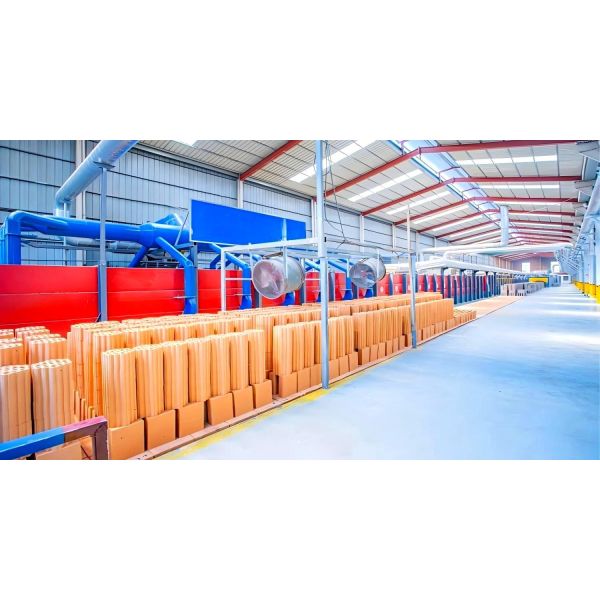
Our innovative Tunnel Kiln Direct Reduced Iron (DRI) solution represents a significant leap forward in sustainable ironmaking technology. Designed for modern metallurgical operations, this process efficiently converts iron ore into high-quality metallic iron using a continuous tunnel kiln and solid reductants. It stands out as a practical, eco-conscious alternative to traditional, energy-intensive blast furnaces. Our system is engineered with a focus on core industrial advantages: exceptional energy conservation, flexible scalability, unwavering production consistency, and outstanding cost-effectiveness. Ideal for steelmakers and foundries aiming to enhance operational agility and reduce environmental impact, this solution empowers businesses to build resilient, future-ready production capabilities. By integrating robust engineering with operational simplicity, we deliver a reliable pathway to high-purity iron production.
Our solution is built on four foundational pillars that deliver measurable performance and economic benefits.
Remarkably Energy-Saving Design
The tunnel kiln’s core innovation lies in its superior thermal
efficiency. The continuous, counter-current flow of materials and
gases ensures maximum heat recovery and utilization. Advanced
insulation and optimized combustion control minimize thermal
losses, drastically reducing specific energy consumption per ton of
DRI produced. This intrinsic energy-saving characteristic not only
lowers operational costs but also significantly reduces the carbon
footprint of the ironmaking process.
Inherently Scalable & Flexible
Unlike large, single-line gas-based plants, our tunnel kiln
technology offers modular scalability. Production capacity can be
tailored precisely to market demand by adjusting the kiln
dimensions or deploying multiple kiln modules in parallel. This
flexibility makes it a perfect fit for greenfield projects of
varying sizes or for the phased expansion of existing operations,
protecting your investment and allowing growth aligned with your
business strategy.
Consistently High & Predictable Output
Consistency is the hallmark of quality. The tunnel kiln provides a
stable, controlled reduction environment with uniform temperature
profiles along its entire length. This ensures every batch of iron
ore undergoes an identical reduction process, resulting in DRI with
exceptionally consistent metallization, carbon content, and
physical structure. This reliability translates directly to
predictable performance in downstream steelmaking, improving yield
and final product quality.
Proven Cost-Effective Operation
This solution delivers cost advantages across the board. It
requires lower capital investment (CAPEX) than large-scale
alternative DRI technologies and has modest infrastructure
requirements. Operationally, its use of widely available solid
reductants (like non-coking coal or biomass), combined with low
energy consumption and minimal maintenance needs, ensures highly
competitive production costs (OPEX), offering a swift return on
investment and a strong bottom-line impact.
This versatile technology is designed to meet the needs of a diverse range of producers.
It is an ideal primary iron source for mini-mills and EAF-based steel plants, providing a cost-stable, high-quality alternative or supplement to scrap metal. Foundries and precision casting facilities benefit from its consistent chemistry, which leads to improved casting quality and reduced defect rates.
The solution is particularly valuable in resource-rich regions with limited access to natural gas or coking coal, enabling localized iron production using indigenous solid fuels. It also serves integrated steelworks seeking to diversify their iron supply, enhance flexibility, and reduce overall plant emissions. Furthermore, it is suited for projects focused on utilizing iron ore fines or waste oxide materials, turning potential waste into valuable metallic feed. From merchant DRI production to captive plant integration, our tunnel kiln solution offers a practical and economical pathway.
Q1: How does the energy-saving feature translate into actual cost
savings?
A: The energy savings are direct and multi-faceted. Reduced fuel
consumption per ton of output lowers your primary operational
expense. Additionally, high thermal efficiency often means lower
electrical power needs for auxiliary systems. Combined, this can
reduce total energy-related OPEX by a significant margin compared
to less efficient reduction technologies.
Q2: What does "scalable" mean in practical terms for a plant?
A: Practically, scalability means you are not locked into a single,
massive capacity. You can start with a line producing, for example,
50,000 TPA tailored to initial demand. As your market grows, you
can add identical kiln modules in parallel to incrementally
increase capacity to 100,000 TPA, 150,000 TPA, or more, optimizing
capital deployment and minimizing risk.
Q3: Can "Consistent" DRI quality improve my EAF operations?
A: Absolutely. Consistent DRI chemistry (metallization, carbon,
gangue) allows for precise charge calculations and smoother EAF
operation. This leads to more predictable melt times, reduced
energy spikes, better slag control, and ultimately, higher yield of
on-specification steel. It stabilizes your entire downstream
process.
Q4: Is this technology suitable for using biomass or waste-derived
fuels?
A: Yes, its flexibility is a key advantage. The tunnel kiln can be
adapted to utilize a variety of solid carbon sources. This includes
certain types of biomass (e.g., charcoal) and processed
waste-derived fuels, supporting efforts to create a circular
economy and further reduce the net carbon footprint of your iron
production.

|
 Tunnel kiln high output modular firing sanitary ware toilet kiln
Precision Control Tunnel Kiln Masonry Mud Brick Kiln Energy Efficiency
Automatic Brick Tunnel Kiln Easy Operation Continuous Natural Gas Fired Kiln
Industrial Durable Continuous Kiln Customizable For Green Brick And Tile
Coal Natural Gas Oil Fuel Tunnel Kiln Automatic Continuous Kiln Process Customized
Tunnel Type Green Bricks And Tiles Kiln Traditional And Efficient Continuous Firing Kiln
High Precision Tunnel Kilns Easy Maintenance For Anode And Cathode Materials
Efficient Masonry Tunnel Kiln High Automation For Dry And Burn Bricks
customizable Green Brick Making Kiln Tunnel Tile Kiln With Natural Insulation
High Output Intelligent Tunnel Kiln Environmental Protection Brick Field Machine
Tunnel kiln high output modular firing sanitary ware toilet kiln
Precision Control Tunnel Kiln Masonry Mud Brick Kiln Energy Efficiency
Automatic Brick Tunnel Kiln Easy Operation Continuous Natural Gas Fired Kiln
Industrial Durable Continuous Kiln Customizable For Green Brick And Tile
Coal Natural Gas Oil Fuel Tunnel Kiln Automatic Continuous Kiln Process Customized
Tunnel Type Green Bricks And Tiles Kiln Traditional And Efficient Continuous Firing Kiln
High Precision Tunnel Kilns Easy Maintenance For Anode And Cathode Materials
Efficient Masonry Tunnel Kiln High Automation For Dry And Burn Bricks
customizable Green Brick Making Kiln Tunnel Tile Kiln With Natural Insulation
High Output Intelligent Tunnel Kiln Environmental Protection Brick Field Machine

